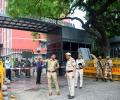
The Election Commission has informed the Supreme Court that over 37 lakh appeals concerning deletions or inclusions in West Bengal's electoral rolls remain pending under the Special Intensive Revision. The apex court-appointed tribunals have disposed of only a fraction of the 38.20 lakh appeals filed, prompting the Supreme Court to seek data and a plan for streamlining the adjudication process.

The Supreme Court has sought a response from the Election Commission on a plea by Trinamool Congress MPs alleging irregularities in the revision of electoral rolls in West Bengal.

Senior Trinamool Congress leader Kalyan Banerjee has commented on the Supreme Court judgment regarding the Special Intensive Revision (SIR) of electoral rolls, emphasising its specific application to the Bihar case and highlighting the Election Commission's limited authority in determining citizenship.

The commission, however, has not specified how many among these new entrants are first-time voters who have just turned 18, nor has it given a detailed gender break up of these voters.

AAP leader Arvind Kejriwal has accused the BJP of conspiring to delete 2.7 million voters from West Bengal's electoral rolls, urging support for the Trinamool Congress to protect citizenship rights.
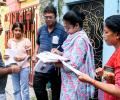
The Supreme Court has directed the Election Commission to provide details on the disposal of appeals by tribunals concerning deletions from West Bengal's electoral rolls during the Special Intensive Revision (SIR). The court emphasised the need to track the progress of these appeals, which were set up to address irregularities. It also clarified that grievances regarding the denial of PDS benefits due to voter deletion should be taken up with the Calcutta High Court.
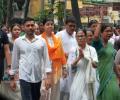
West Bengal Chief Minister Mamata Banerjee has accused the BJP of bribing voters and has labelled the Special Intensive Revision (SIR) of electoral rolls as a major scam. She also predicted the BJP government at the Centre would fall in 2026.

West Bengal Chief Minister Mamata Banerjee has accused the BJP of attempting to illegally include voters from outside the state in West Bengal's electoral rolls, alleging a coordinated effort to interfere with democratic rights.
West Bengal Chief Minister Mamata Banerjee is set to hold a dharna in Kolkata against alleged arbitrary deletions in the state's electoral rolls, marking a return to her roots as a street fighter and signalling a key political battle ahead of Assembly elections.

The Election Commission is set to publish the draft electoral rolls for West Bengal on Tuesday following the completion of the statewide Special Intensive Revision (SIR) ahead of the 2026 assembly polls. The publication of the draft rolls will mark the end of the enumeration phase and the beginning of a far more contentious stage - claims, objections and hearings that will stretch into February 2026.
Union Minister J P Nadda criticised the Trinamool Congress (TMC) government in West Bengal, accusing it of disregarding democratic procedures, the judiciary, and the Election Commission of India. He alleged that the rule of law has been compromised in the state, particularly concerning the special intensive revision of electoral rolls.
Opposition parties are questioning the Election Commission's intentions behind the second phase of special intensive revision of electoral rolls in 12 states and Union Territories. The BJP has slammed the Congress and called the opposition a 'herd of dissatisfied souls'.
The Supreme Court has strongly criticised the West Bengal government's handling of an incident in Malda district where judicial officers were allegedly attacked. The BJP has accused the TMC of orchestrating the event to obstruct the Special Intensive Revision (SIR) of electoral rolls and protect Rohingyas.

The extent of doubts over the fairness of this election can be assessed by juxtaposing two figures: Total votes polled by the two principal parties and the number of people who were disallowed from voting this time, observes Nilanjan Mukhopadhyay.

Haryana Chief Minister Nayab Singh Saini predicts a BJP government in West Bengal, citing a desire for development and change among the state's residents.

Appellate tribunals in West Bengal have only disposed of a small fraction of the appeals filed against decisions made during the electoral roll revision, raising concerns about the efficiency of the process.

TMC leader Abhishek Banerjee has accused the Congress party of indirectly supporting the BJP in West Bengal, urging voters to reject them in the upcoming elections. He alleged a nexus between the Congress, BJP, and Left parties, claiming that votes for Congress would split the opposition and benefit the BJP.

The West Bengal government has transferred over 500 bureaucrats ahead of the Special Intensive Revision (SIR) of electoral rolls. The move has drawn criticism from the opposition BJP, who allege it is an attempt to manipulate the electoral process.

Police in West Bengal have arrested 17 people, including an Indian Secular Front (ISF) candidate, in connection with the alleged confinement of judicial officials during a protest over voter list deletions in Malda district.
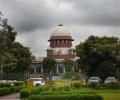
The Supreme Court has agreed to hear a plea challenging the Election Commission's decision to conduct Special Intensive Revision (SIR) of electoral rolls in Tamil Nadu, Kerala and West Bengal. The court is also addressing concerns about disenfranchisement and citizenship issues related to the revision process.
West Bengal's Chief Electoral Officer is reviewing CCTV footage following allegations by the Trinamool Congress that a BJP representative improperly submitted voter enrolment forms. The investigation aims to address concerns about potential violations of electoral regulations and ensure the integrity of the voter list.
TMC leader Abhishek Banerjee addressed a rally in Murshidabad, accusing political rivals of working for the BJP and promising to restore voting rights to disenfranchised citizens if his party returns to power.

This election is different. It is no longer simply about governance or welfare. It is about identity, fear, and who belongs. The BJP has successfully shifted the terms of the debate from what the government has delivered to who the real Bengali is and who is an outsider, points out Ramesh Menon.

West Bengal Chief Minister Mamata Banerjee has accused authorities of deleting names of people from the Matua and minority communities from voter rolls in the state following a Special Intensive Revision (SIR) exercise.

Congress leader Rahul Gandhi criticised the BJP and RSS for undermining the Constitution and accused the TMC of failing to provide jobs in West Bengal during recent rallies.

The Supreme Court has directed an appellate tribunal to expeditiously decide an appeal filed by a 75-year-old advocate challenging the deletion of his name from the West Bengal voters' list following a Special Intensive Revision exercise. The court noted the petitioner appeared to be a bona fide resident and requested a decision within two months.
A PIL has been filed in the Supreme Court seeking a detailed constituency-wise disclosure of disenfranchisement caused by the Special Intensive Revision (SIR) of electoral rolls in West Bengal.

The Election Commission reports a significant reduction in West Bengal's electoral rolls following a Special Intensive Revision, with nearly 9.1 million voters deleted.

Two NCPI MPs from Murshidabad, West Bengal, met with Chief Minister Suvendu Adhikari to express concerns over the removal of mosque loudspeakers, alleging police overreach and targeting of Muslims. They also sought his intervention to expedite hearings for approximately 27 lakh people excluded from electoral rolls, highlighting difficulties faced by genuine voters due to delays in tribunal decisions.

Union Home Minister Amit Shah asserts the BJP will form a government in West Bengal and address the issue of infiltration, accusing Mamata Banerjee of allowing it for vote-bank politics.
Union Home Minister Amit Shah has criticised the TMC government in West Bengal, alleging that its policies have led to increased infiltration and threaten national security. He framed the upcoming elections as a battle against these issues, promising change if the BJP comes to power.
West Bengal Chief Minister Mamata Banerjee has announced a new unemployment allowance of Rs 1,500 per month for young job seekers in the state, starting March 7. The announcement comes ahead of the assembly elections and aims to support unemployed youth aged 21-40 who have passed their secondary exams.
West Bengal Chief Minister Mamata Banerjee has accused the central government of pressuring the outgoing Governor C V Ananda Bose to resign and alleged that his replacement, R N Ravi, is a BJP cadre.
Union Minister Sukanta Majumdar criticised West Bengal Chief Minister Mamata Banerjee's dharna and outlined the BJP's promises for the upcoming assembly elections, including job creation, increased financial assistance for women, and proper DA for state government employees.
Union Home Minister Amit Shah addressed rallies in West Bengal, promising to address infiltration issues, resolve the Gorkha issue, and tackle corruption if the BJP wins the upcoming elections.
Maharashtra Chief Minister Devendra Fadnavis has accused the TMC of conspiring to include infiltrators in electoral rolls, claiming the party objects to the Special Intensive Revision (SIR) while those rightfully removed from the rolls did not protest.

Despite numerous appeals, only two names have been restored to the West Bengal electoral rolls after 2.7 million deletions, raising concerns about voter access and the functionality of proposed tribunals.
The Election Commission has issued instructions to district election officials in West Bengal regarding voters marked as 'unmapped' due to technical issues during the digitisation of the 2002 electoral rolls.

Union Home Minister Amit Shah accuses the West Bengal government of openly facilitating infiltration, defends the Special Intensive Revision of voter lists, and asserts BJP's prospects in upcoming elections.

West Bengal's appointment of Manoj Agarwal, the former Chief Electoral Officer, as the new Chief Secretary has ignited a political firestorm, raising concerns about the fairness and impartiality of the state's electoral processes.
